
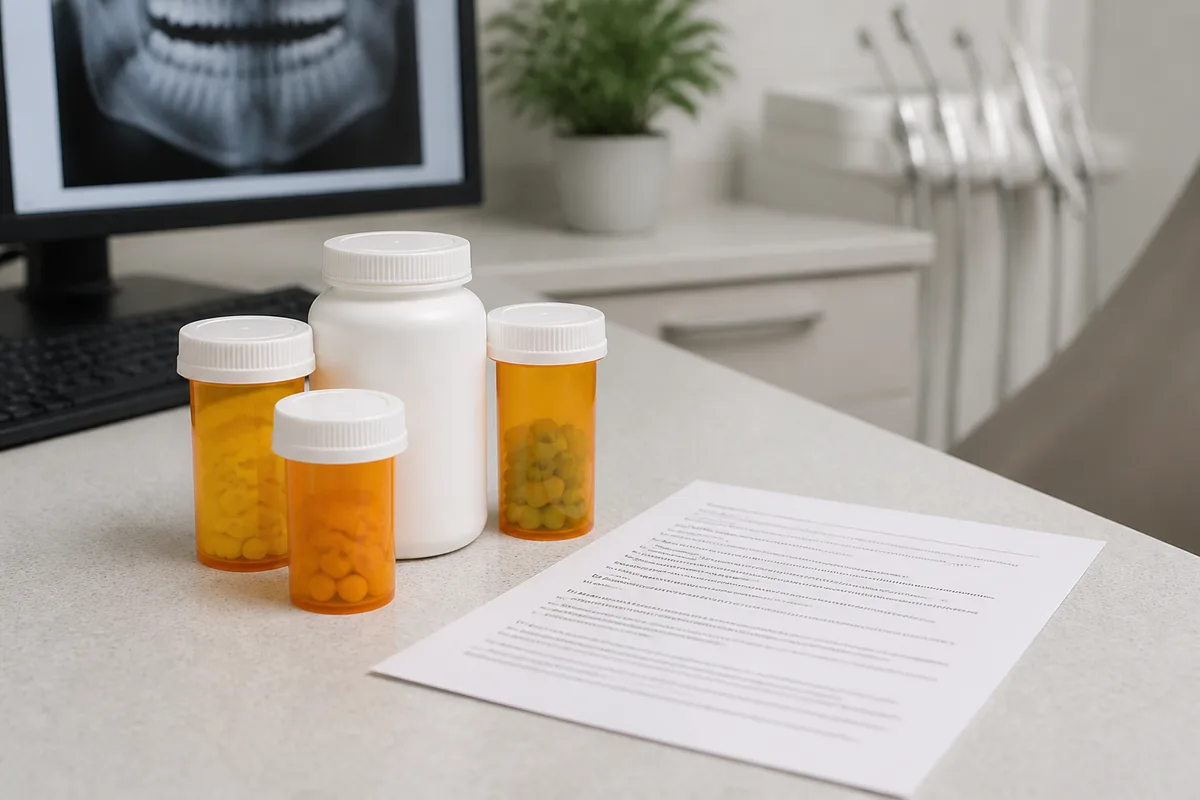
This page explains the kinds of medication commonly used around periodontal and implant treatment and how to take them sensibly. It does not include doses. Take everything exactly as written on your prescription label and on the instruction sheet you were given, and call 720-676-1231 if anything is unclear.
Pain relief
Most periodontal surgery is managed well with over-the-counter pain relievers rather than opioids. Starting your first dose before the local anesthetic fully wears off keeps you ahead of the discomfort rather than chasing it. Follow the dosing on the package or your prescription, never exceed the daily maximum on the label, and check with us or your pharmacist before combining products, since many combination cold and pain remedies already contain acetaminophen. If you have kidney disease, stomach ulcers, or take blood thinners, tell us before surgery so we can advise which pain reliever is appropriate for you.
Antibiotics
Antibiotics are not needed for every procedure. When they are prescribed, finish the entire course even if the area feels fine after a few days, and take them with food if the label says to. Antibiotics can reduce the effectiveness of hormonal contraceptives, so use a backup method during the course and for the period your pharmacist advises. Stop and call us if you develop a rash, itching, swelling, or diarrhea that will not settle.
Prescription mouth rinse
Chlorhexidine rinse is often prescribed after gum surgery. Use it as directed, usually after brushing rather than at the same time, and wait about 30 minutes after brushing so the toothpaste does not neutralize it. Do not eat or drink for about 30 minutes afterwards. Longer-term use can cause temporary brown staining on the teeth and tongue and can dull your sense of taste. Both reverse once you stop, and staining can be polished off at your next hygiene visit.
Pre-medication before your appointment
Some patients need an antibiotic before dental treatment, typically those with certain heart conditions or a recent joint replacement, on the advice of their physician or cardiologist. If this applies to you, take the dose at the time we specify before your appointment. If you forget, call us before you set off rather than turning up and hoping. Do not double a missed dose on your own.
Medications you already take
- Blood thinners. Never stop or adjust these on your own. We coordinate with your physician when it matters.
- Bisphosphonates and other bone medications. Tell us the drug and how long you have taken it, since it affects surgical planning.
- Diabetes medication. Ask us how to manage timing if you have been told not to eat before a procedure.
- Everything else. Bring a current list, including supplements. Some, such as fish oil and high-dose vitamin E, affect bleeding.
If something goes wrong
Call 720-676-1231 for anything that concerns you. For a severe reaction such as difficulty breathing, swelling of the face or throat, or a widespread rash, call 911 first.