
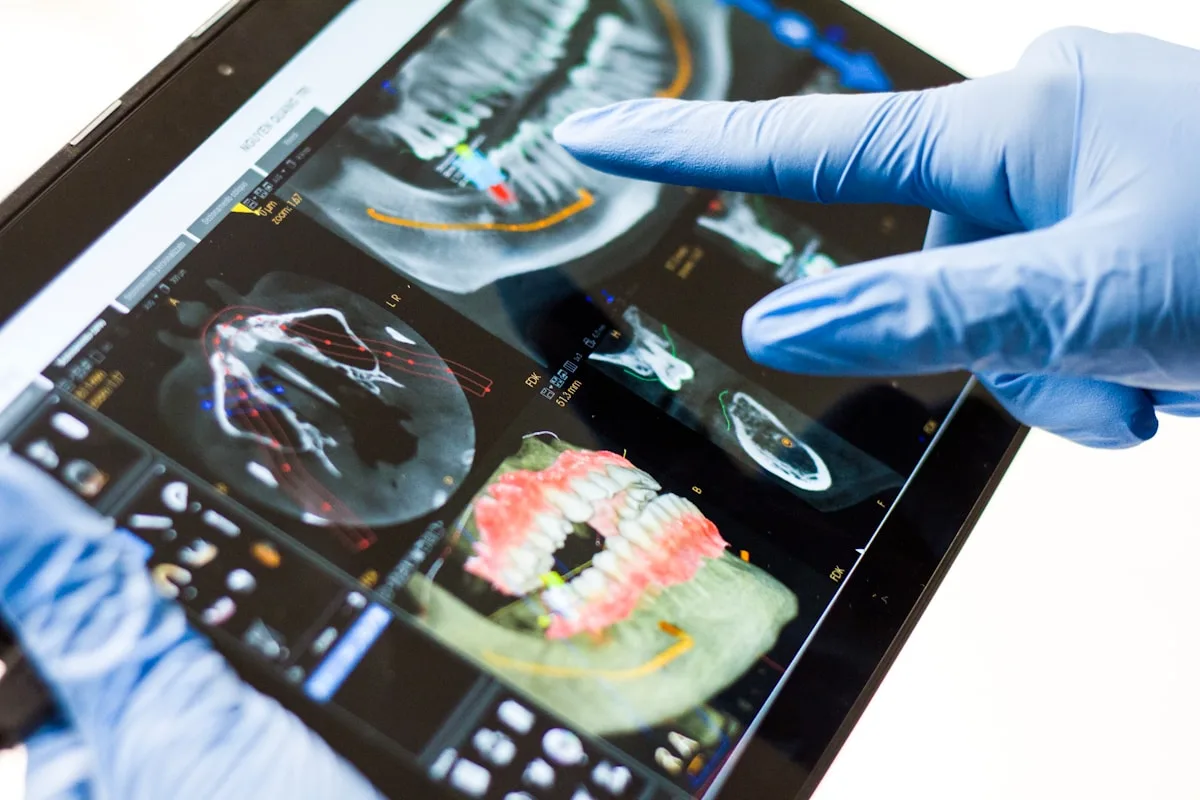
Implant placement is planned digitally before you are ever in the chair for surgery. A CBCT scan captures your jaw in three dimensions, an intraoral scan records the shape of your teeth and gums without impression trays, and the two are merged into a single model of the site we are treating.
Working in that model, we position the implant virtually — checking bone volume, angulation, and the safe distance from nerves and the sinus — and then carry that plan into surgery using X-Guide dynamic navigation or a 3D-printed surgical guide. The position we agreed on beforehand is the position the implant actually ends up in.
For you this shows up as shorter appointments, fewer surprises during surgery, and a restoration that is planned from the start around how the final tooth should look and function. Your digital records also stay on file, so future visits can be compared against an exact baseline.