
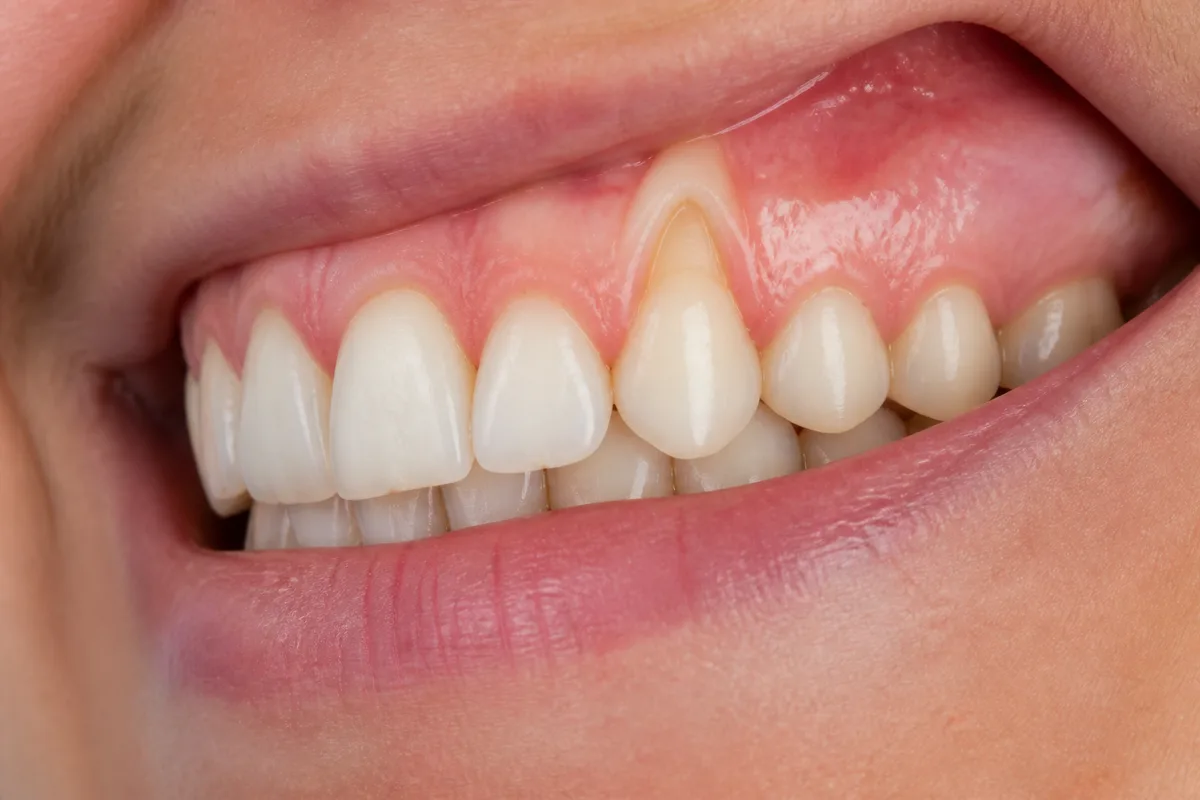
Gum recession is one of the most common reasons patients are referred to us, and the first question is nearly always the same: do I need a graft? The honest answer is that many people do not — at least not yet. Recession only needs surgical correction when it is progressing, when it threatens the tooth, or when it is causing symptoms you cannot live with.
Why gums recede
Recession is tissue loss, and tissue is lost for a reason. The usual causes are periodontal disease destroying the attachment around the tooth; aggressive brushing with a hard brush or heavy pressure; a naturally thin gum type over a tooth that sits prominently in the arch; grinding and clenching; and orthodontic movement that pushed a root toward the outside of the bone. Lip and tongue piercings and a high frenum pull can do it too.
The cause dictates the treatment. Grafting a site while the patient still scrubs with a hard brush, or while active periodontal infection continues, simply sets up the same loss again.
When watching is the right call
If the recession is mild, stable across several years of records, the root is not notched or decayed, and you have no sensitivity or cosmetic concern, monitoring is legitimate care. We photograph and measure the site, fix the cause, and re-measure at each maintenance visit. Change over time — not the presence of recession alone — is what drives the decision.
When a graft is worth doing
- The recession is measurably deeper than it was at the last visit
- Little or no firm attached gum tissue remains, so the area cannot tolerate brushing or a restoration margin
- Root sensitivity is affecting what you eat and drink and has not responded to desensitizing measures
- The exposed root is decaying or notching
- The tooth is about to be crowned or moved orthodontically and needs a stable band of tissue first
- The appearance of a long tooth in your smile line matters to you — a valid reason on its own
What the procedure involves
A connective tissue graft borrows a thin layer of tissue from the palate and tucks it under the gum at the recession site, where it both thickens the tissue and covers the root. Donor tissue from a tissue bank can be used instead when several teeth are involved or you would rather not have a palatal site. For certain cases, a pinhole technique repositions your own tissue through a small entry point with no scalpel incisions and no palatal donor site.
Most patients are back to normal routines the next day, on soft foods for about a week, with the palate — when used — being the part they notice most. Full tissue maturation takes a few months.
Get a measured answer
Recession is easy to misjudge in a mirror. Dr. Chandrasekaran will chart the exact millimetres, identify what is causing the loss, and tell you plainly whether you need a graft now, later, or not at all. Call 720-676-1231 to schedule.