
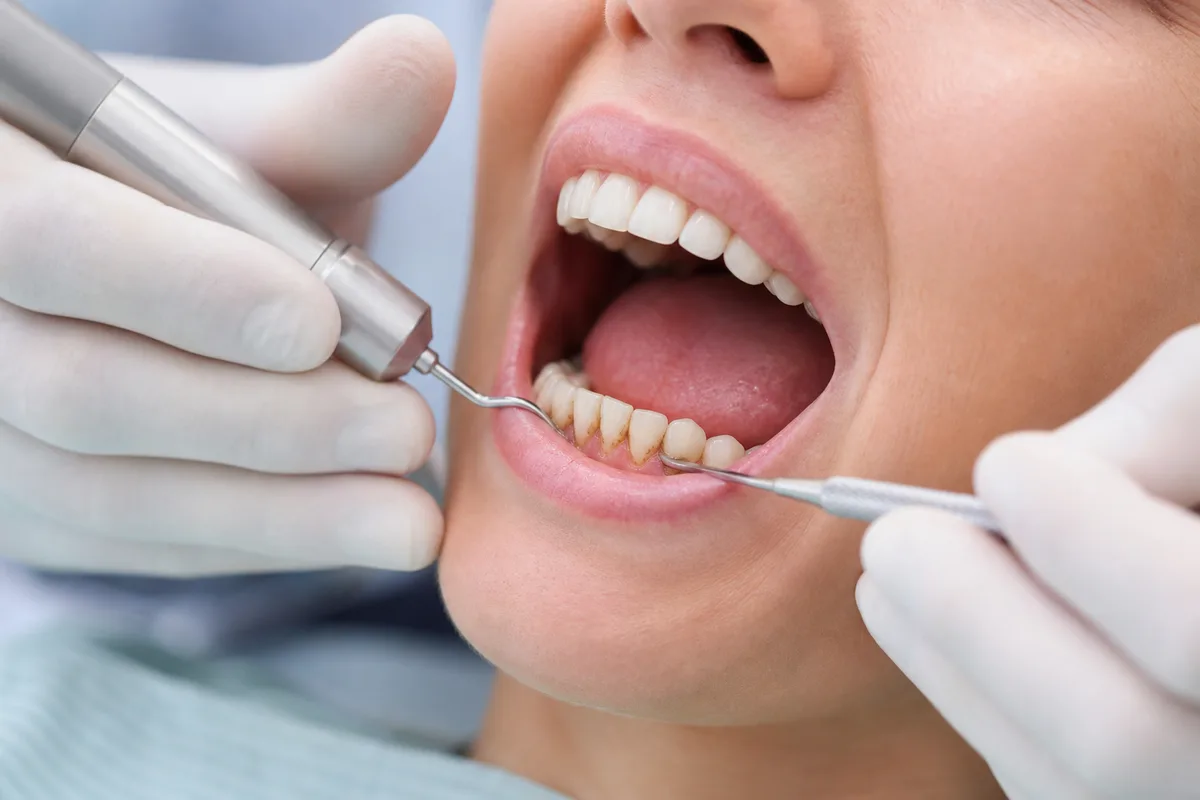
Patients often feel blindsided when they are told they need a deep cleaning instead of the cleaning they have had twice a year for decades. It sounds like an upsell. It is not — the two procedures treat two different conditions, and they are billed and coded differently for exactly that reason.
A regular cleaning is preventive
A routine prophylaxis works above and just below the gum line on a mouth with healthy attachment. Plaque and hardened calculus are removed from the visible tooth surfaces and the shallow crevice around them, the teeth are polished, and you are done in one appointment without anesthetic. It is designed to keep healthy gums healthy.
Scaling and root planing is therapeutic
When periodontal disease has deepened the crevice into a pocket, calculus and bacterial biofilm now sit on the root surface, several millimetres below the gum, where no brush or routine cleaning instrument reaches. Scaling removes those deposits from the root. Root planing smooths the root surface so the gum tissue can re-adapt tightly against it instead of staying inflamed.
Because the work happens below the gum line, the area is numbed, and the mouth is usually treated in halves or quadrants across two visits. Ultrasonic instruments break up the heavy deposits and hand instruments finish the root surface. Some cases also get an antimicrobial placed directly into deep pockets, or laser therapy to decontaminate the pocket.
How the decision is made
It is not a judgment call made by eye. We measure the depth of the crevice around every tooth at six points, note where the tissue bleeds on probing, chart recession, and read the bone level on X-rays. Pockets of 4 mm or more with bleeding and visible bone loss indicate periodontitis, and periodontitis is what scaling and root planing treats. Healthy 1–3 mm readings mean a routine cleaning is the right care.
Afterward
- Expect tenderness and cold sensitivity for a few days as the roots are briefly more exposed; it typically fades within a couple of weeks
- Gums often look slightly more recessed once the swelling resolves — that is inflammation leaving, not tissue being removed
- We re-measure the pockets four to six weeks later to confirm the tissue reattached
- Most patients move to a periodontal maintenance interval of three to four months rather than six, because the bacteria repopulate deeper pockets faster
- Sites that stay deep after healing may need pocket reduction surgery or regenerative treatment
Ask for the numbers
If you have been told you need a deep cleaning, you are entitled to see your pocket chart and your X-rays and to have the reasoning explained. That is exactly how Dr. Chandrasekaran presents a treatment plan. Call 720-676-1231 for an evaluation or a second opinion.